
Feline medicine • Breeding and multicat care
Understand the agents, recognise severity, choose meaningful investigations and organise care for the cat and its group.
General review for owners, breeders and veterinary teams. Prescribing and detailed protocols require professional assessment.
Signs that change the priority
Open-mouth breathing, respiratory effort or collapse: immediate emergency care. A very painful or closed eye, or corneal change: prompt examination. A kitten nursing less, losing weight or becoming less responsive: call without delay. Warn the clinic before arrival so contagious patients can be received safely. Do not force food or fluid if breathing or swallowing is impaired.
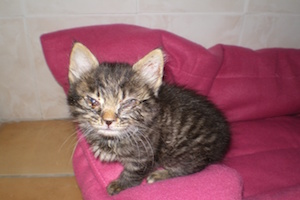
1. Feline upper respiratory disease is a syndrome, not one infection
“Cat flu” or coryza describes upper respiratory, ocular and sometimes oral signs. It does not identify a single pathogen. Age, vaccination, contacts, housing and the lesions guide the investigation. Mixed infections are possible, and pneumonia or another disease may occur at the same time.
| Agent | Suggestive presentation, not a diagnosis on its own | Practical implication |
|---|---|---|
| Feline herpesvirus FHV-1 | Rhinitis, conjunctivitis and corneal disease; some ocular lesions are strongly suggestive. | Latency in nerve ganglia allows reactivation after apparent recovery. |
| Feline calicivirus FCV | Oral ulcers and painful eating; respiratory signs and sometimes lameness. | Persistent shedding may occur; this is not the same neural latency as FHV-1. Greater environmental resistance matters. |
| Chlamydia felis | Prominent conjunctivitis in a compatible contact history. | Targeted confirmation and a coordinated contact strategy may be appropriate. |
| Bordetella bronchiseptica | Respiratory disease in some groups; vulnerable kittens may develop lower respiratory disease. | Distinguish rhinitis from pneumonia and investigate the affected site. |
| Mycoplasma spp. | May be detected with or without disease; species and context differ. | A positive PCR alone does not establish a need for treatment. |
Do not use FHV-1 and FCV interchangeably or label every nasal discharge a viral infection. The ABCD guidelines describe their different mechanisms and diagnostic limitations. [1] [2]
2. Transmission, carriage and recurrence
Close contact with secretions, shared equipment and contaminated hands supports spread within a group. A cat that looks well again may still shed a pathogen. Absence of sneezing in a new arrival does not certify freedom from infection.
FHV-1 can reactivate around stress, group changes or parturition. A carrier queen may expose kittens after birth. This does not justify transferring the reproductive mechanisms of canine herpesvirus to cats. FCV involves prolonged shedding or further exposure rather than the same dormant neural reservoir.
Keep three questions separate. Is the cat ill? Does the detected agent explain the lesions? Can the cat transmit infection? These questions can have different answers. Improved comfort does not demonstrate that shedding has stopped.
3. Recognise severity before waiting for a laboratory result
| Situation | Why it matters | Safe immediate response |
|---|---|---|
| Open-mouth breathing, respiratory effort, abnormal mucous membranes or collapse | Possible respiratory or circulatory emergency. | Seek emergency care, minimise handling and warn the clinic about possible contagion. |
| A closed or very painful eye, cloudy cornea or visible lesion | An ulcer or another ocular disorder may threaten vision. | Arrange prompt examination; do not reuse eye drops, particularly steroids, without an appropriate prescription. |
| A kitten nursing less, losing weight, becoming cold or less responsive | Limited reserves and potentially rapid deterioration. | Contact the veterinarian immediately; assess the queen and the rest of the litter too. |
| Oral pain, refusal to eat or drink, dehydration or marked lethargy | Nasal congestion may not be the only cause of poor intake. | Arrange assessment according to severity, often the same day; do not wait a fixed number of days. |
| Fever with oedema, skin lesions, jaundice or several severely affected cats | Possible systemic disease or another serious condition. | Urgent veterinary and group assessment; call ahead to organise safe admission. |
Virulent systemic FCV disease is uncommon but should be considered in a compatible outbreak. In one published outbreak involving 54 cats, adults and vaccinated cats were affected too. Its mortality cannot be transferred to every household or cattery. [15]
4. A focused clinical examination before a shopping list of tests
First assess breathing, ocular pain, hydration and food intake. Examination includes general condition, mouth and teeth, eyes, nose and the respiratory system. Corneal assessment may require fluorescein staining. Cough or respiratory effort also calls for consideration of lower respiratory disease, rather than assuming uncomplicated cat flu.
Bring a clear history: age, onset and progression, one-sided or bilateral signs, recent vaccine and product, previous treatments, new arrivals, boarding or show exposure, weight change, other affected cats and any deaths. For a neonate, include nursing, weight records and the queen’s condition.
| Question | Possible investigation | Limitation to explain |
|---|---|---|
| Is the cornea affected, or is there another cause of ocular pain? | Appropriate ophthalmic examination and lesion-directed tests. | PCR does not describe lesion depth or severity. |
| Is a particular pathogen involved in an unusual or group episode? | Targeted sampling, sometimes from several representative cats. | Site, timing, prior treatment and sample quality affect the result. |
| Is there dehydration, poor nutrition or another disease? | Blood tests and further investigations selected from the examination and patient history. | Normal blood results do not make painful eye or mouth disease unimportant. |
| Is there lung disease? | Thoracic imaging and appropriate respiratory sampling when indicated. | A nasal swab need not represent the lower airways. |
| Why is rhinitis persistent, unilateral or bloody? | Dental assessment, imaging, rhinoscopy and/or biopsies as appropriate. | Consider a foreign body, polyp, fungal disease or neoplasia rather than repeating empirical treatment indefinitely. |
A useful test supports a decision. It should clarify an explanation, change management or prevent unnecessary treatment. A larger panel is not automatically a better investigation.
5. PCR, culture and antibodies: interpret the result in context
PCR detects genetic material in the submitted sample. Alone, it does not prove viability, explain every lesion or define a precise period of contagiousness. True detection of carriage should not automatically be called an analytical false positive.
| Finding or context | Careful interpretation | Practical consequence |
|---|---|---|
| Positive PCR with compatible lesions | Supports a hypothesis without excluding coinfection or another cause. | Relate pathogen, site, timing and group history before selecting treatment. |
| Positive PCR in a clinically well cat | Carriage or shedding may occur without established clinical causation. | Do not treat a laboratory report or promise eradication. |
| Negative PCR despite strong suspicion | Uninformative sampling, intermittent shedding or an untested agent remain possible. | Reconsider the hypothesis, sampling site and timing; repeat only when it changes management. |
| Recent vaccination | Some assays may detect vaccine strains, depending on product and method. | Tell the laboratory the vaccine and date; do not dismiss severe signs. |
| Culture of superficial nasal discharge | Surface flora or secondary colonisation may be represented. | Do not infer deep infection and an antibiotic solely from this result. |
| FHV-1 or FCV antibodies | Serum antibodies do not summarise local immunity or individual protection. | Do not use them as a certificate of non-infectiousness or complete protection. |
ISCAID recommendations emphasise clinical interpretation and the limitations of superficial samples. [3]
A prospective study published online in September 2026 compared 46 cats with rhinitis and 37 controls. Mycoplasma detection, particularly M. felis, was associated with rhinitis. This supports targeted investigation, not proof of causation in every positive cat or automatic antibiotic treatment of every carrier. [14]
6. Before the appointment: support without creating another problem
- Use a quiet, comfortable, ventilated separate area with dedicated bowls and equipment. Protect kittens and vulnerable contacts.
- Observe breathing without prolonged restraint. Record actual intake, drinking, pain and activity; a short video may help without delaying urgent care.
- Offer suitable palatable food only if breathing and swallowing are comfortable. Gently remove external secretions without irritants; stop any intervention that increases distress.
- Do not force food or fluid into the mouth of a breathless, severely depressed cat or one that cannot swallow normally. Safe assisted nutrition then requires the veterinary team.
- Do not use human medication, essential oils, inhaled disinfectants or leftover eye treatment. Do not independently alter a prescribed plan.
Comfort measures do not cancel an emergency. A painful eye, respiratory effort or a deteriorating kitten still needs immediate assessment even if secretions have been cleaned away.
7. Supportive care determines whether the cat can recover
The care plan must support breathing, rest and adequate nutrition. Cleaning the nose does not treat oral pain; an antiviral does not correct dehydration; disappearance of discharge does not establish corneal healing. Reassess these priorities together.
| Objective | Veterinary decision | What to monitor |
|---|---|---|
| Breathing | Oxygen and hospital care when needed; investigate lower airway disease or obstruction. | Effort, posture, handling tolerance and comfort at rest. |
| Hydration and general balance | Assess the deficit and choose appropriate support. | Drinking, urination, clinical condition and follow-up tests when indicated. |
| Pain and nutrition | Address pain, nausea and oral lesions; organise assisted nutrition when needed. | Measured intake, body weight, comfort and tolerance of the nutrition plan. |
| Eyes | Treat the diagnosed lesion, monitor healing and adapt local treatment. | Pain, eye opening, corneal clarity and the planned re-examination. |
| Feasibility | Provide an achievable prescription, explain administration and arrange review. | Whether treatment can actually be given and any adverse effects. |
Hospitalisation may be needed when the required care cannot be delivered safely at home, intake is inadequate or respiratory/general condition is unstable. A kitten with declining nursing or weight needs an early response rather than an adult waiting period.
8. Antibiotics need an indication
Antibiotics do not treat FHV-1 or FCV. Discharge colour alone does not establish a need for them. Conversely, clinically significant bacterial disease, systemic illness or pneumonia must not be overlooked. Examination and progression guide the indication. [3]
Selection depends on the suspected or confirmed agent, site, age, comorbidities and previous treatment. An antibiotic covering some bacteria is not interchangeable with another for Chlamydia or Mycoplasma. Convenient administration does not establish suitability. If progress is poor, revisit diagnosis, administration and complications before moving through successive antibiotics.
No automatic whole-group treatment. A positive PCR in one cat does not justify treating every contact. Some confirmed infections do require coordinated management; that decision needs the group history and veterinary assessment.
9. Antivirals and adjuncts: distinguish evidence from expectation
Cell-culture activity is a research signal. An experimental challenge tests a particular model. A trial in naturally affected animals is more directly clinical but still depends on population, concurrent care and chosen outcomes. An FHV-1 treatment is not automatically an FCV treatment.
| Option and study | Evidence type | Clinical reading and limits |
|---|---|---|
| Famciclovir — Vernau 2024 [5] | Triple-masked randomised trial enrolling 373 kittens with ocular manifestations of infectious upper respiratory disease, alongside antibiotic and ophthalmic care. | Clinical benefit mainly in initially mildly affected kittens and fewer new corneal lesions; not universal benefit in severe disease or a demonstrated survival effect. |
| Famciclovir — Reinhard 2020 [6] | Small controlled field trial, 22 cats in two shelters. | Favourable clinical-score signal, with a limited sample and a multicausal syndrome. |
| Ocular cidofovir — Fontenelle 2008 [7] | Controlled experimental FHV-1 study in 12 cats. | Reduced signs and ocular shedding in that model; prescription and safety monitoring remain necessary. |
| Feline interferon omega — Ballin 2014 [9] | Controlled trial in 37 cats with acute respiratory disease. | No demonstrated clinical advantage over placebo for the tested regimen; a viral-load signal is not equivalent to recovery. |
| Lysine — Drazenovich 2009 [10] | Shelter study with 261 cats initially and substantial loss to follow-up. | No demonstrated efficacy; not an established routine prevention or treatment. |
| Intranasal maropitant — Parncutt 2025 [11] | Masked randomised trial in 61 shelter cats (34 receiving maropitant, 27 controls), alongside other care; assessment after seven days. | No significant clinical advantage over saline on the evaluated outcomes. |
| Nitazoxanide and mizoribine — Cui 2020 [12] | Anti-FCV activity in vitro; nitazoxanide also tested in experimentally infected cats. | Research findings, not an established standard for naturally affected cats. |
| PSSNa — Synowiec 2026 [13] | Exploratory trial in 28 FCV-positive cats with inflammatory oral disease, alongside variable care. | Oral-disease findings do not establish efficacy for every respiratory case, neonates or systemic FCV. |
In the Vernau trial, initially mildly affected kittens achieved clinical recovery and resolution sooner with added famciclovir, while the corresponding ophthalmic recovery and resolution comparisons were not statistically significant. Fewer new cases of corneal disease were a separate finding. These endpoints do not establish faster ocular recovery for every kitten. [5]
Safety needs separate consideration: a retrospective series of 140 cidofovir-treated cats reported six suspected local ocular toxic reactions. Persistent inflammation during treatment may therefore be an adverse effect rather than resistant infection. This is not a universal risk estimate; it supports reassessment instead of owner-led treatment extension. [8]
In the PSSNa study, viral RNA fell in both groups. Separate before/after comparisons do not themselves demonstrate superiority between groups. The small sample, concurrent dental/medical care and declared intellectual-property interests require caution. The study establishes neither French availability or authorisation nor universal safety. [13]
Practical conclusion. Antivirals can be appropriate for selected herpetic disease. None of these findings establishes a universal cat-flu cure. The veterinarian checks indication, contraindications, formulation, prescribing requirements and monitoring. Human medicines are not interchangeable.
10. Persistent or recurrent signs: revisit the explanation
Recurrence may reflect herpesvirus reactivation, further exposure, residual structural damage with inflammation or a different disease. It does not prove continuous replication of one virus or a need for a stronger antibiotic.
Consistently one-sided discharge, bleeding, facial change, unusual pain, weight loss or insufficient response warrants reconsideration of dental, structural, inflammatory, fungal and neoplastic causes. Chronic gingivostomatitis needs its own oral and dental assessment: a positive FCV PCR does not summarise its cause or replace that investigation.
Avoid repeated empirical treatment. A record of episodes, observed lesions, investigations and actual response helps distinguish temporary improvement, relapse, new infection and adverse effects.
11. Kittens, pregnant queens and litters
In very young kittens, nasal obstruction, pain, reduced nursing and thermal instability can reinforce one another. Examining only one kitten without checking the queen and litter may miss a group problem. Weight records, observation of nursing and early recognition of reduced activity are useful.
Ocular swelling or discharge before the eyelids normally open needs prompt examination. Do not force the lids open. Do not force-feed an unstable kitten. Nutrition, thermal and respiratory support need a coordinated veterinary plan and close reassessment.
Before breeding, review health history, vaccination and maternity organisation. During pregnancy and lactation, check each product’s suitability for that situation. Adult efficacy does not prove embryonic or neonatal safety. Separating a queen and kittens requires an individual decision that also considers feeding and welfare.
12. Vaccination reduces risk without guaranteeing a complete barrier
FHV-1 and FCV vaccines form part of core feline protection. They reduce disease but do not guarantee freedom from infection or carriage. Maternal antibodies can interfere with responses in kittens. Timing therefore depends on age, vaccine history, risk, current recommendations and the specific product information. [4]
Plan vaccination before group entry or breeding rather than during a crisis. Booster decisions should not follow one rule for every cat or an isolated FHV/FCV antibody result. Additional vaccination is risk-based and does not replace contact management, introduction procedures or hygiene.
A vaccinated cat with signs still needs assessment. Vaccination does not rule out severe disease or another diagnosis, and it is not an immediate treatment for an established episode.
13. Catteries and multicat households: organise an outbreak response
| Step | Concrete action | Avoid |
|---|---|---|
| Record | List cats, groups, onset, care, results and movements. | Reconstructing the episode from memory after repeated transfers. |
| Separate coherently | Distinguish sick cats, contacts and cats without identified exposure; stabilise groups. | Mixing everyone because the first case is confirmed. |
| Manage arrivals | Provide separate space and observation for new arrivals; reassess before mixing. | A universal duration claimed to exclude all carriage. |
| Organise care | Dedicated equipment and staff where possible; work from lower exposure towards sick groups. | Sharing bowls, textiles, carriers or instruments without appropriate cleaning. |
| Clean then disinfect | Remove contamination, choose a product effective against FCV, follow its label, rinse when required, dry and ventilate. | Equating fragrance, antibacterial claims or simple hand rub with proven FCV efficacy. |
| Review | Monitor new cases and severity; adapt testing and return-to-group decisions. | Calling the group clear from one negative PCR or the end of sneezing alone. |
Isolation of sick cats and separate observation of new arrivals serve different purposes. Control combines diagnosis, fewer contacts, care and organisation. Disinfection must account for the product, surfaces and feline safety; never mix chemicals. Warn receiving clinics or boarding facilities about an affected group.
Reducing crowding, repeated regrouping and stress also matters. Accessible resources, suitable housing and staff able to detect early signs are part of health management alongside vaccination.
14. Follow-up and prognosis: monitor function, not discharge alone
| Record | Favourable direction | Reason to reassess |
|---|---|---|
| Breathing at rest | Comfort and activity returning. | Effort, open-mouth breathing or worsening fatigue: emergency. |
| Intake and weight | Measured food intake and recovery of the expected weight trend. | Refusal, pain or weight loss; act earlier in a kitten. |
| Eyes and mouth | Less pain and healing confirmed at re-examination. | Closed eye, corneal change, new ulcers or difficulty swallowing. |
| Treatment | Feasible administration and tolerance under the prescription. | Suspected adverse effect, inability to administer or insufficient expected response. |
| Group | Fewer new cases and no new severe presentations. | Spread, deaths or unusual disease: revisit group management. |
Many uncomplicated cases improve with appropriate care. Lower respiratory involvement, poor nutrition, deep ocular lesions or systemic disease worsen the outlook. Sequelae and recurrence remain possible. One recovery time or overall survival percentage would misrepresent these different situations.
Frequently asked questions
Is cat flu always a minor cold?
No. Breathing, the cornea and nutrition can be threatened. A painful eye, open-mouth breathing or a deteriorating kitten needs prompt care.
Can a vaccinated cat still develop disease?
Yes. Vaccination reduces risk and severity without guaranteeing freedom from infection or shedding. Do not dismiss signs in a vaccinated cat.
Does a positive PCR identify the cause?
Not on its own. It detects a target in a sample. The veterinarian interprets it with lesions, timing, site and group history.
Should I wait several days if a kitten eats less?
No. Reduced nursing or intake, weight loss or reduced activity needs early advice. Respiratory difficulty or marked depression is an emergency.
Can I use antibiotics left over from last time?
No. The pathogen, affected site and needs may differ. Reassessment helps avoid inappropriate treatment and a missed diagnosis.
Do antivirals eliminate herpesvirus permanently?
They may reduce selected manifestations but do not demonstrate removal of latency. Their value depends on the patient and disease; they are not interchangeable between all cat-flu agents.
Are lysine, nasal maropitant or a new anti-FCV product essential?
The studies do not support presenting them as established universal treatments. Evidence, studied population and safety must be assessed separately for each option.
Can I reuse old eye drops?
Not without advice. Corneal disease and adverse effects can resemble recurrence. Some eye medicines can worsen an inappropriate lesion; a painful eye needs examination.
When can the cat rejoin the others?
Resolution of signs alone does not define the end of transmission risk. Consider the agent, progress, vulnerable contacts and group organisation; one test cannot guarantee a universal isolation period.
Should every cat in the cattery receive treatment?
Not automatically. Coordinated treatment may be appropriate for some confirmed infections, but it requires case/contact assessment and a group plan rather than an isolated PCR result.
Why is the cat still sneezing after treatment?
Persistent inflammation, damage, reactivation, new exposure or another disease are possible. Unilateral signs, bleeding, weight loss or repeated episodes warrant a redirected investigation.
Does specialist advice replace the primary veterinarian?
Local examination remains essential for eye assessment, emergencies and hospital care. Specialist input can help interpret investigations, recurrence and cattery management with the primary veterinarian.
Scientific references
Guidelines, trials in naturally affected animals and experimental studies contribute different levels of evidence. The treatment table above distinguishes the populations, findings and limitations relevant to clinical decisions.
[1] ABCD — Feline herpesvirus infection; updated 14 May 2026.
[2] ABCD — Feline calicivirus infection; updated 27 March 2025.
[3] Lappin et al. 2017. ISCAID respiratory antimicrobial guidelines. DOI: 10.1111/jvim.14627.
[4] Squires et al. 2024. WSAVA vaccination guidelines. DOI: 10.1111/jsap.13718.
[6] Reinhard et al. 2020. Famciclovir in shelter cats. DOI: 10.3390/ani10091448.
[7] Fontenelle et al. 2008. Experimental ocular FHV-1 and cidofovir. DOI: 10.2460/ajvr.69.2.289.
[10] Drazenovich et al. 2009. Lysine supplementation in shelter cats. DOI: 10.2460/ajvr.70.11.1391.
[12] Cui et al. 2020. Nitazoxanide/mizoribine and FCV. DOI: 10.1016/j.antiviral.2020.104827.
[15] Hurley et al. 2004. Virulent systemic FCV outbreak. DOI: 10.2460/javma.2004.224.241.
© Xavier Lévy 2026. Third-party rights reserved. This review does not replace examination of an ill animal.