Neonatal care · Practical summary
Plan the first feeds, identify vulnerable newborns and understand the limits of their protection.
Dr Xavier Lévy · Originally published: 2019-02-14 · Updated: 7 October 2026
Key points. Newborn puppies and kittens have an immune system, but it is still developing. Colostrum provides essential maternal protection: early intake matters as well as quality. Gaining weight does not necessarily mean that a newborn has received enough antibodies. In some kittens, blood group incompatibility requires a different plan for the first feeds. Later, declining maternal antibodies and their interference with vaccination create a variable period of vulnerability.
For owners and breeders. Treatment, blood sampling and assisted feeding techniques require veterinary guidance.
A weak newborn should not wait for the next feed
- Ineffective suckling, refusal to feed, reduced activity or confirmed weight loss.
- A cold body, breathing difficulty, pale or blue mucous membranes, marked diarrhoea or a painful abdomen.
- Several newborns deteriorating, deaths in the litter, an unwell mother or an abnormal mammary gland.
- In kittens: weakness after the first feeds, pallor, jaundice or dark urine, especially when blood group incompatibility is possible.
Contact your veterinarian promptly. Do not force-feed a cold, very weak newborn or one unable to swallow. Provide cautious warmth while arranging care.
1. Colostrum provides protection, not complete immunity
Puppies and kittens are born with immune cells and defence mechanisms, but their immune responses are still developing. Transfer of maternal antibodies through the placenta is limited. Much of their early protection therefore depends on antibodies received after birth, mainly through colostrum, the first mammary secretion. [1]
Passive and active immunity
Passive immunity comes from antibodies made by the mother and passed to her newborn. It is immediate but temporary: the newborn does not replenish those maternal antibodies. Active immunity involves the young animal’s own responses, including those stimulated by vaccination. It develops over time and does not provide immediate protection against every infection.
Colostral antibodies absorbed into the bloodstream contribute to systemic protection. Other components of colostrum and milk support local intestinal defences. These effects should be distinguished: once the intestinal barrier has closed to large proteins, milk still has nutritional and digestive benefits, but it cannot restore missed systemic antibody transfer in the same way.
Nutrition and immune protection are different needs
Colostrum also supplies energy and nutrients. An appropriate milk replacer may help meet nutritional needs; it should not automatically be regarded as an immune substitute for colostrum. A commercial “colostrum” label is not enough: species of origin, antibody content, safety and clinical evidence all matter.
A newborn may gain weight yet remain insufficiently protected. A reassuring growth curve does not establish adequate antibody concentrations or protection against each infectious agent.
2. The first hours: check that suckling is effective
The intestine’s ability to absorb antibodies declines rapidly. In an experimental study of 22 Beagle puppies, transfer was better after intake at 0–4 hours than at later times. Closure was progressive, beginning between 4 and 8 hours and completing between 16 and 24 hours. These findings do not define a safe waiting period before arranging the first feed. [2]
Record each newborn’s birth time and check that it can find a teat, latch and suckle effectively as soon as its condition permits. Lying beside the mother is not proof of intake. Colostrum quality varies between mothers and mammary glands; rear glands are not consistently the richest in antibodies. [1]
| Time or situation | Practical priority | Important limitation |
|---|---|---|
| Before birth | Prepare monitoring, weighing, emergency contacts and a backup plan with your veterinarian. | Having milk replacer available does not replace a passive transfer plan. |
| Each newborn’s first hours | Check activity, warmth and effective suckling; record delays. | The first puppy’s birth time does not establish the age of every littermate. |
| Ineffective suckling or unavailable colostrum | Seek prompt, individual advice. | Waiting until the next day’s weighing may lose a useful opportunity. |
| An older newborn | Maintain nutrition, warmth and monitoring; have its risk and clinical condition assessed. | Late oral intake does not necessarily correct inadequate bloodstream antibodies. |
3. Which newborns need closer monitoring?
- Very low birth weight, suspected prematurity or difficult delivery: reduced activity, poor access to teats or weak suckling.
- Caesarean delivery or an exhausted, painful or unwell mother: delayed contact, disrupted maternal care or insufficient milk availability.
- Large litters or marked competition: some newborns appear to nurse but are repeatedly displaced.
- Orphans or early separation: the timing and amount of colostrum intake may be unknown.
- Hypothermia, congenital abnormalities, respiratory or digestive problems: poor suckling may be a consequence of disease, rather than its only cause.
- Repeated litter problems: maternal, infectious and environmental factors also need investigation.
A risk factor does not prove failed transfer. It supports closer observation and earlier assessment when intake is uncertain. Conversely, a birth without obvious problems does not guarantee adequate antibody transfer.
4. Assessment: feeding history, examination and targeted tests
Start with birth and first-feed times, the newborn’s initial condition, care already provided, any supplements and weight changes. The veterinarian examines the newborn and, where appropriate, its mother and littermates. The assessment looks for problems such as hypothermia, hypoglycaemia, dehydration, congenital abnormalities or infection.
| Assessment | What it can contribute | What it cannot establish |
|---|---|---|
| Observed suckling and weight monitoring | Identify inadequate feeding and newborns at risk. | Measure transferred antibodies or rule out infection. |
| Blood immunoglobulin measurement, when available and relevant | Document passive transfer more directly; interpret by age and assay. | Guarantee protection against all diseases from a single value. |
| Total protein and other indirect markers | Support selected assessments using appropriate references. | Apply calf or other species’ thresholds automatically, or ignore hydration and clinical context. |
| Tests selected from clinical findings | Identify a treatable metabolic problem, anaemia, infection or maternal disorder. | Attribute every fading newborn to insufficient colostrum. |
In a canine breeding study, IgG concentrations measured at two days were associated with mortality risk. Proposed thresholds describe a population and method; they should not be applied without adjustment to kittens or every laboratory. Inadequate transfer increases risk, but does not determine an individual newborn’s outcome. [3]
Another canine study assessed very early growth as a marker of transfer. Its screening performance depended in particular on puppies not receiving milk replacer. The marker is therefore not a universal rule for supplemented litters. Total antibodies also do not consistently describe pathogen-specific antibodies several weeks later. [4]
Select the right test at the right time. Sampling must account for timing, the limited blood volume of a very small patient, assay performance and the decision the result would support. A Brix instrument or a test developed for ruminants is not validated for dogs or cats simply by using it in those species.
5. What if the newborn has received insufficient colostrum?
Stabilise the patient and investigate the cause
A weak newborn first needs assessment and stabilisation. Controlled warming, metabolic support, hydration and treatment of a possible infection are tailored to the findings. Simply giving more milk may delay care or cause aspiration. Antibiotics do not replace passive transfer and are not automatically indicated for every newborn considered at risk.
When early oral intake is still possible
The veterinarian may help organise access to maternal colostrum or an appropriate alternative. Stored colostrum or a foster mother may be considered according to species, health status, required compatibility in cats and collection procedures. Poorly planned collection can deprive a donor’s own newborns.
A colostrum bank should be organised in advance: donor selection, hygiene, species and date labelling, traceability, storage and gentle thawing under a veterinary protocol. An unknown product should not be given simply because it is described as “natural”.
When intestinal absorption can no longer provide the intended transfer
Blood products may be considered in selected circumstances. They require donor selection and screening, compatibility assessment, an appropriate administration route, monitoring and a realistic appraisal of benefit. These are not injections to perform at home. An experimental study in colostrum-deprived kittens found that adult cat serum could raise IgG concentrations; this alone does not establish reduced mortality across all clinical situations. [6]
A product from another species cannot be assumed equivalent. A study of equine immunoglobulins in kittens illustrates the distinction between measurable antibodies and expected protective functions. [7] Doses and detailed protocols belong in veterinarian-only technical resources after verification of indications and sources.
6. Kittens: prevent neonatal isoerythrolysis
In some type B queens, antibodies transferred in colostrum can destroy the red blood cells of type A or AB kittens. This is neonatal isoerythrolysis. Nursing, usually beneficial, may therefore be dangerous in a particular incompatible pairing. Prevention depends on knowing parental blood groups and establishing an individual plan before birth when incompatibility is possible. [5]
Do not withhold colostrum from all kittens or improvise a return to the queen at a fixed time. The veterinarian organises identification of affected kittens, temporary nutrition, any compatible source of immune support and the timing of renewed maternal contact. Canine passive transfer thresholds are not automatically validated in kittens.
Plan ahead. A litter at risk of blood group incompatibility needs a protocol before delivery. A kitten becoming weak, pale or passing dark urine after nursing requires urgent assessment; switching to milk replacer alone does not treat haemolysis already underway.
7. The immunity gap: variable vulnerability, not one fixed age
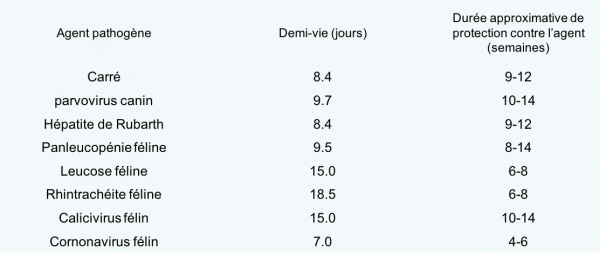
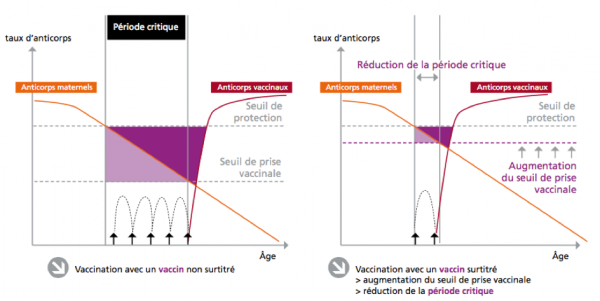
Maternal antibodies decline progressively. Their concentration may become too low for adequate protection while still interfering with vaccination against certain agents. Risk depends on the initial level, pathogen, vaccine, age and exposure. Even littermates may not share exactly the same period of vulnerability.
The veterinarian plans the primary vaccination series and boosters according to species and risk. A first injection does not guarantee that protection is already established. Recurrent infectious disease in a breeding setting warrants investigation of causes and preventive measures. Feline guidance highlights the variability of maternal antibodies and their effect on vaccination. [10]
This immunological window is different from the sensitive period for behavioural development. Thoughtful infection control should allow appropriate positive experiences in a controlled setting: people, sounds, gentle handling and selected contacts. Complete isolation may impair development, while contaminated locations and sick animals create avoidable risks.
8. Prevention without unnecessary treatment
- Before breeding: review maternal health, vaccination and infectious risks; consider blood groups in cats where relevant.
- Before delivery: prepare a clean environment supporting temperature regulation, individual records and an accessible backup plan.
- At birth: observe every newborn, record times, check effective nursing and reduce competition for vulnerable littermates.
- During growth: track weight, behaviour, stools and maternal health; seek advice before the whole litter deteriorates.
- For new arrivals and contacts: plan separation and introductions according to risk, avoid shared contaminated equipment and contact with sick animals.
- After repeated losses: keep an accurate history and promptly arrange the sampling or post-mortem examination recommended by your veterinarian.
Hygiene should reduce contamination without irritating newborns or disrupting maternal care. Cleaning, appropriate disinfection, drying and management of separate areas need to work together. Improvised “sterilisation” of mammary glands or routine supplements cannot replace this organisation.
9. Recent research: promising questions, limited conclusions
A March 2025 study of 36 mothers and 284 puppies explored maternal microbiotas. Some associations involved vaginal microbiota and mortality; colostral microbiota groups were not associated with neonatal outcomes in that population. This observational study establishes neither causality nor the effectiveness of microbiota-directed treatment. [8]
A February 2025 study of 17 mothers and 81 puppies selected for analysis investigated maternal yeast supplementation and found differences in early growth and metabolic profiles. It did not demonstrate correction of inadequate IgG transfer or fewer deaths. These findings do not justify universal supplementation. [9]
These studies from one kennel are not independent validations. [8] [9]
Practical implication: timely, appropriate first feeds, individual monitoring, maternal health and prompt investigation of abnormalities remain the priorities. An innovation should be judged by clinical benefit and limitations, rather than a biological change alone.
10. Practical questions
How can I know whether the newborn actually received colostrum?
Observe effective suckling and record the first feeds. Proximity to the mother and weight gain provide useful information, but do not measure antibodies. Seek prompt advice if intake is uncertain.
Is a large puppy necessarily better protected?
No. Size and vigour may improve access to teats, but do not guarantee enough antibodies. Monitor every newborn, with closer attention to vulnerable littermates.
Are milk replacer or bovine colostrum sufficient?
An appropriate milk replacer can meet nutritional needs, but does not guarantee the intended immune transfer. Products from another species have different properties; assess their value without importing calf recommendations.
Is it too late to seek help after the first day?
No. The intestinal transfer window may have passed, but the veterinarian can still investigate abnormalities, support the newborn and adapt preventive measures or treatment. Gut closure is not a reason to give up.
Should all kittens be prevented from nursing to avoid isoerythrolysis?
No. This measure concerns specific blood group incompatibilities and requires a veterinary plan. Withholding colostrum without an indication also deprives kittens of its benefits.
Does every vulnerable litter need antibiotics?
No. Clinical condition, risk factors and investigations guide their use. They do not replace colostrum, suitable nutrition or treatment of a metabolic disorder.
Can socialisation begin before vaccinations are complete?
The plan should balance behavioural development with infection control. Choose suitable experiences and selected contacts in a safe setting, following your veterinarian’s recommendations for the household or breeding environment.
Focused advice
When does specialist advice help?
Feeding difficulties, repeated losses or a high-risk litter: a targeted assessment helps select useful tests and measures without repeated trial and error. Dr Xavier Lévy offers consultations at CRECS near Toulouse and Bordeaux Sud, with French- or English-language advice coordinated with your treating veterinarian.
12. References and scope
This summary draws on Dr Xavier Lévy’s personal neonatal care materials, including the final Salzburg presentation from September 2026 and the April 2026 abstract, supplemented by the publications below. Canine findings are not assumed to apply automatically to kittens. Original personal materials are not offered for download.
- Chastant-Maillard et al. Canine and feline colostrum. Reproduction in Domestic Animals, 2016. Review. DOI.
- Chastant-Maillard et al. Timing of the intestinal barrier closure in puppies. Reproduction in Domestic Animals, 2012. Experimental study. PubMed.
- Mila et al. Inadequate passive immune transfer in puppies: Definition, risk factors and prevention in a large multi-breed kennel. Preventive Veterinary Medicine, 2014. DOI.
- Mila et al. General and type 2 parvovirus-specific passive immune transfer in puppies – Evaluation by early growth. Reproduction in Domestic Animals, 2018. DOI.
- Casal, Jezyk and Giger. Transfer of colostral antibodies from queens to their kittens. American Journal of Veterinary Research, 1996. PubMed.
- Levy JK, Crawford PC, Collante WR and Papich MG. Use of adult cat serum to correct failure of passive transfer in kittens. JAVMA, 2001. Experimental study. PubMed.
- Crawford et al. Evaluation of treatment of colostrum-deprived kittens with equine IgG. American Journal of Veterinary Research, 2003. Experimental study. PubMed.
- Garrigues et al. Composition of the fecal, vaginal and colostrum microbiotas of dams at parturition and their relationship with neonatal outcomes in dogs. Animal Microbiome, 6 March 2025. Full text.
- Bendahmane et al. Maternal oral supplementation with Saccharomyces boulardii I-1079 during gestation and early lactation impacts the early growth rate and metabolic profile of newborn puppies. Frontiers in Nutrition, 27 February 2025. Full text.
- ABCD. Maternally Derived Immunity and Vaccination. Feline guidance, consulted 6 October 2026. Guidance.
Thesis consulted for historical context: Vincent Segalini, Le colostrum des carnivores domestiques, ENVA, 2007: sections on transfer and alternative sources. Historical protocols are checked against original studies; this thesis is not a current treatment guideline.
Dr Xavier Lévy shares his knowledge freely to support better care. This summary cannot replace individual advice: tests and decisions depend on the newborn, its mother and the litter.
Dr Xavier Lévy · Originally published: 2019-02-14 · Updated: 7 October 2026
© Xavier Lévy 2026 — original writing of this summary. Publications, illustrations and other third-party contributions retain their own rights; applicable contracts remain reserved.